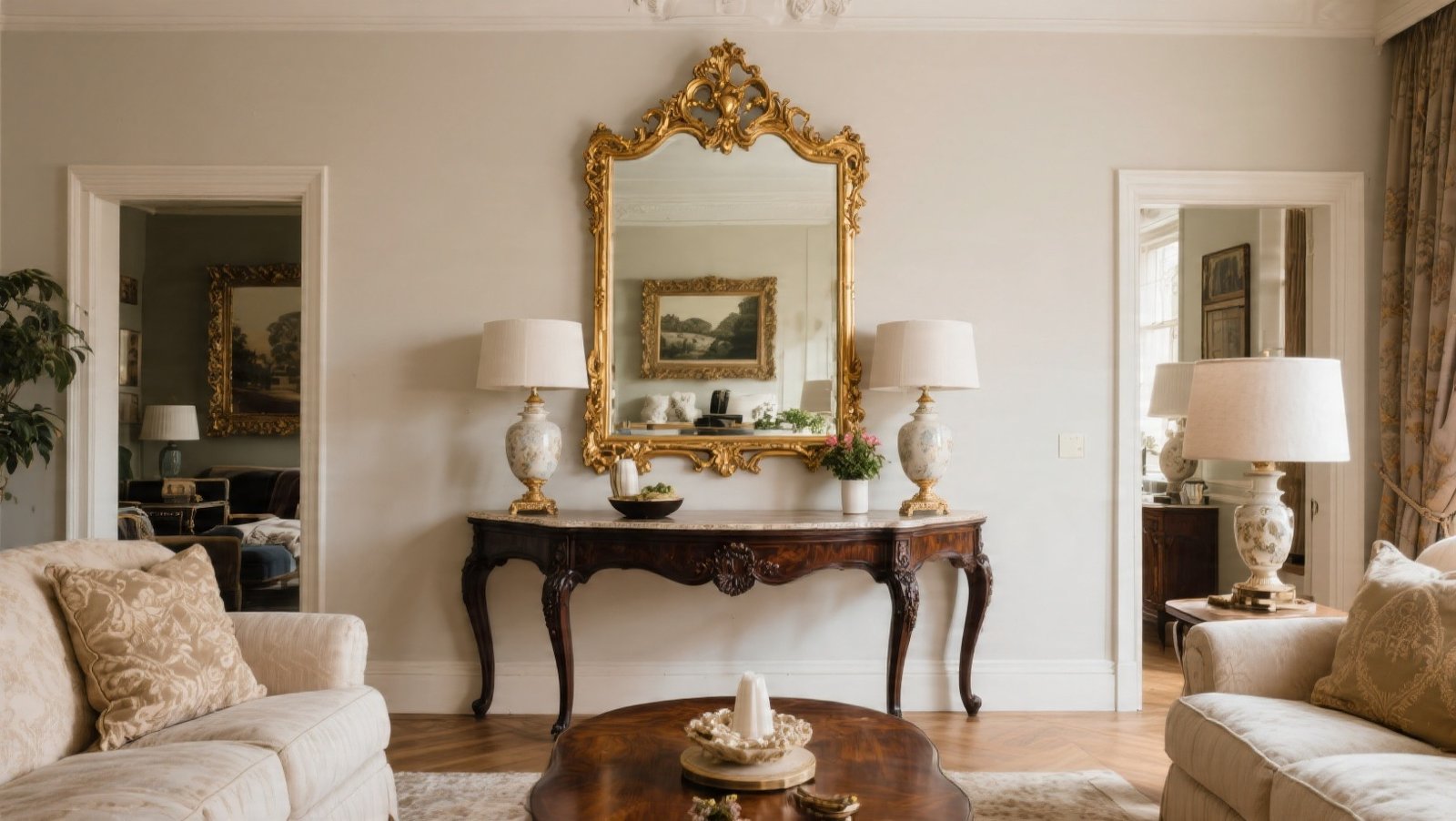
Mirrors are one of the most versatile tools in home decor, yet they are often hung without much thought, serving merely as a functional piece rather than an integrated design element.
This approach misses a significant opportunity to enhance a room’s light, depth, and overall aesthetic. When mirror wall decor feels like an afterthought, the space can feel incomplete or disjointed.
Instead of randomly placing mirrors, consider how they can actively contribute to your home’s story. With a deliberate approach, mirrors can become powerful focal points, expand perceived space, and reflect beauty.
This guide explores 19 better ways to make your mirror wall decor feel truly intentional, moving them from mere reflection to thoughtful design.
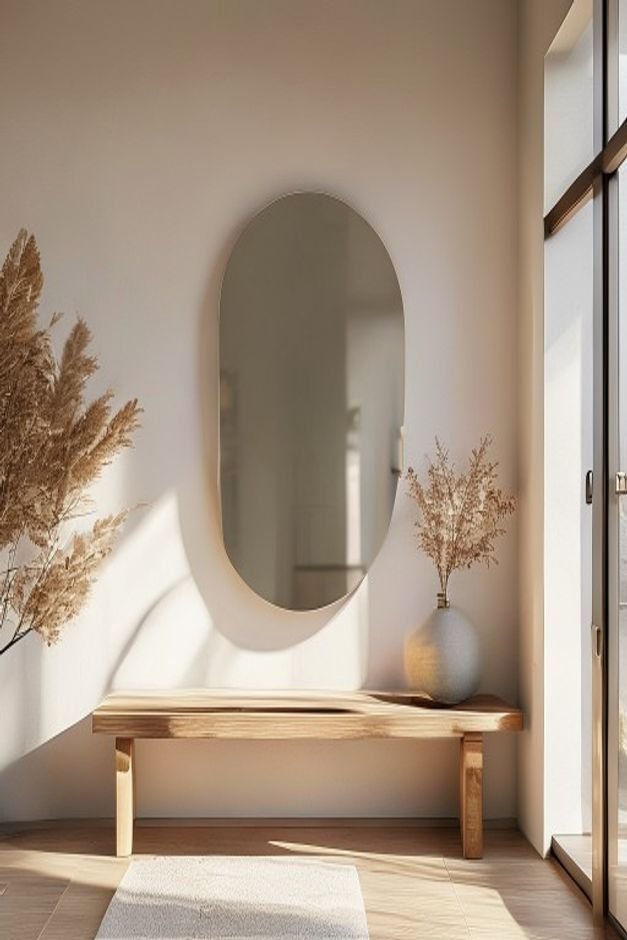
Consider the Mirror’s Role
Before hanging any mirror, it’s crucial to understand its potential impact on the room. A mirror isn’t just about checking your appearance; it’s about altering the perception of space and light.
1. Define its purpose: light, view, or decoration. Every mirror should have a job. Are you trying to brighten a dark corner, bring an outdoor view indoors, or simply add a decorative element? Clarifying this purpose guides your choice of size, shape, and placement.
2. Treat it as a primary design element, not an afterthought. Instead of filling a blank wall with a mirror because you don’t know what else to do, position it as an anchor.
Design around it, considering how it interacts with furniture, art, and architectural features.
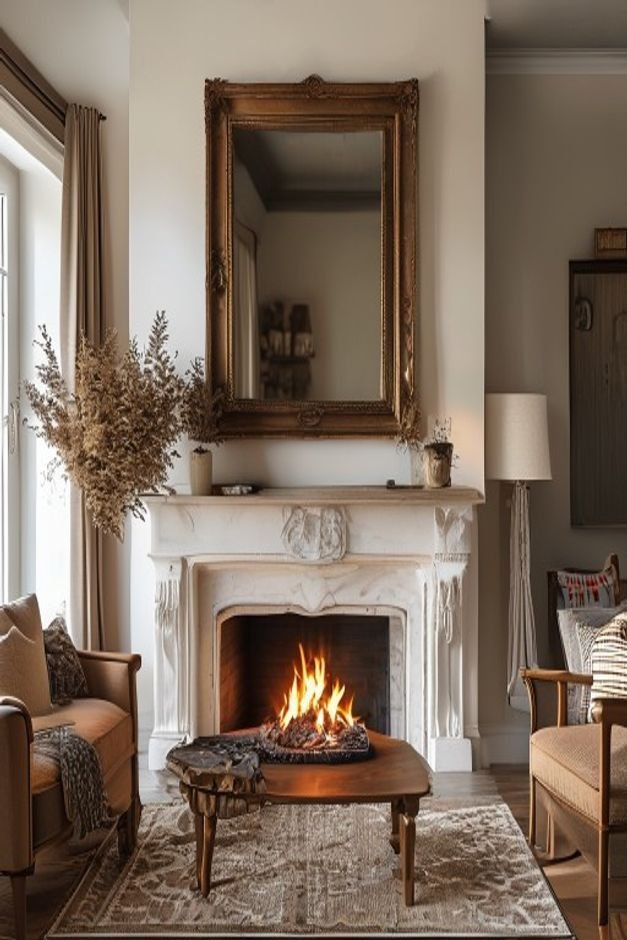
Mastering Scale and Proportion
The size of your mirror relative to its surroundings is paramount. An improperly scaled mirror can disrupt a room’s balance, making it feel either too small and lost or overwhelmingly large.
3. Match the mirror’s size to the wall section it occupies. A mirror should comfortably fill its designated space without appearing cramped or dwarfed. For a large wall, a substantial mirror creates impact; for a narrow section, a tall, slender one works best.
4. Ensure it’s proportional to furniture below or beside it. When placed above a console, dresser, or sofa, the mirror should ideally be about two-thirds to three-quarters the width of the furniture piece. This creates a cohesive visual unit.
5. Avoid tiny mirrors on vast walls; they get lost. A small mirror on a large, empty wall only emphasizes the wall’s emptiness. If you love a smaller mirror, consider grouping it or placing it in a more intimate setting, like a hallway nook.
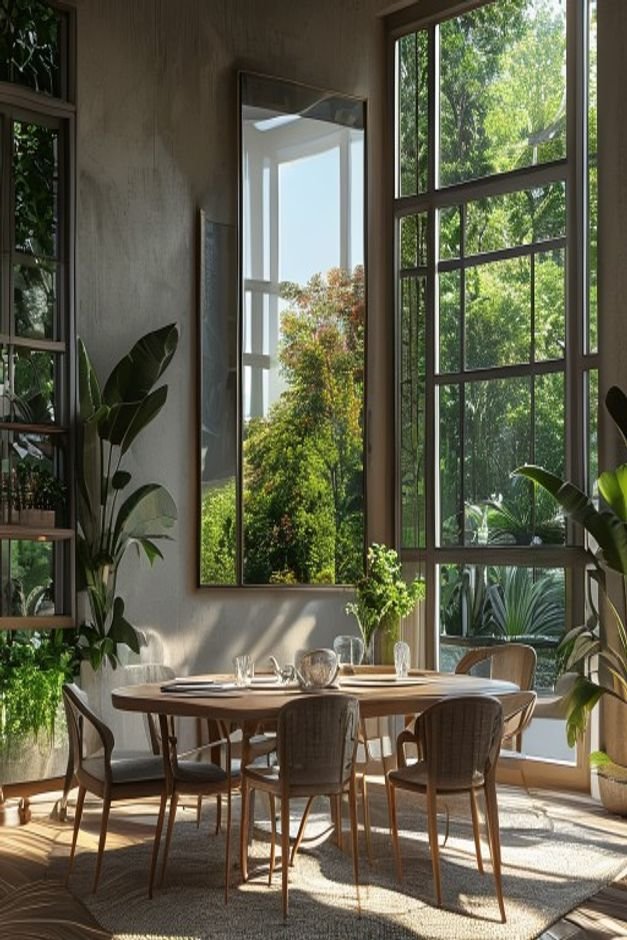
Strategic Placement for Impact
Where you place a mirror dictates what it reflects and, consequently, how it affects the room. Thoughtful placement can dramatically alter a space’s atmosphere.
6. Position opposite a window to amplify natural light. This is a classic trick for a reason. By placing a mirror directly across from a window, you effectively double the incoming light, making the room feel brighter and more open, especially in north-facing rooms.
7. Capture and frame a beautiful outdoor view. If you have a picturesque garden, cityscape, or natural landscape outside, use a mirror to bring that view inside. Angle it to perfectly frame the most appealing part of the scenery, creating a living piece of art.
8. Create an illusion of depth in smaller spaces. In compact rooms or narrow hallways, a well-placed mirror can trick the eye into perceiving greater depth. A large, frameless mirror can nearly disappear into the wall, making the space feel twice its size.
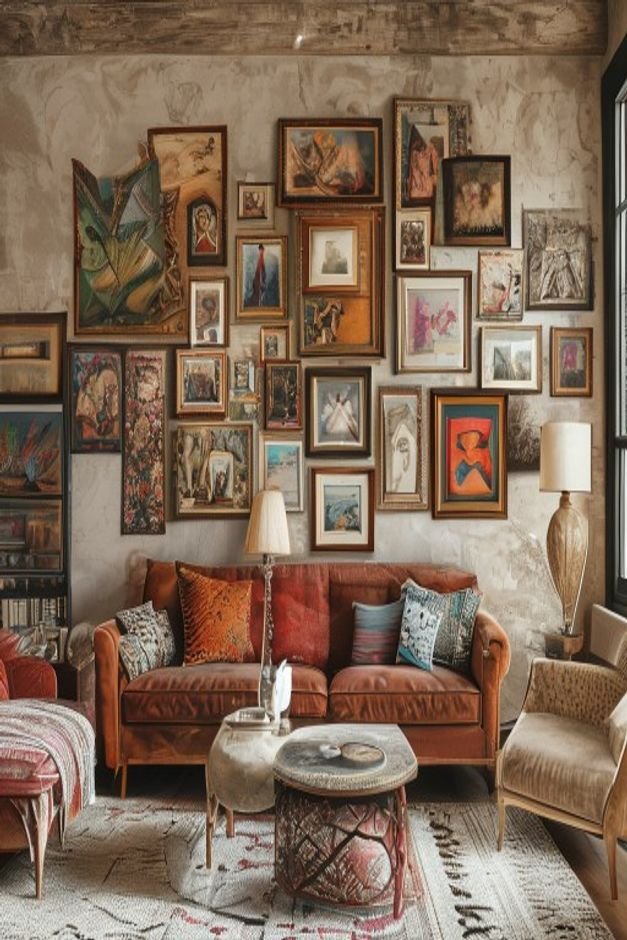
Integrating Mirrors into Gallery Walls
Mirrors don’t have to stand alone. They can be powerful components within a larger art arrangement, adding texture, reflection, and unexpected visual breaks.
9. Use a mirror as the central anchor for a gallery. Instead of a painting, let a striking mirror be the focal point of your gallery wall.
Arrange smaller pieces of art and photographs around it, using its reflective quality to tie the whole collection together.
10. Mix mirror shapes and sizes within a collection. Combine a variety of mirror shapes—round, square, arched—with different frame styles. This adds dynamic interest and prevents the gallery from feeling too uniform. Ensure there’s a consistent element, like frame color, to maintain cohesion.
11. Group a series of small, uniform mirrors for a cohesive grid. For a more structured look, arrange several identical small mirrors in a grid pattern. This creates a powerful, repetitive design that adds texture and light without overwhelming the space.
This approach to mirror wall decor can feel very architectural.
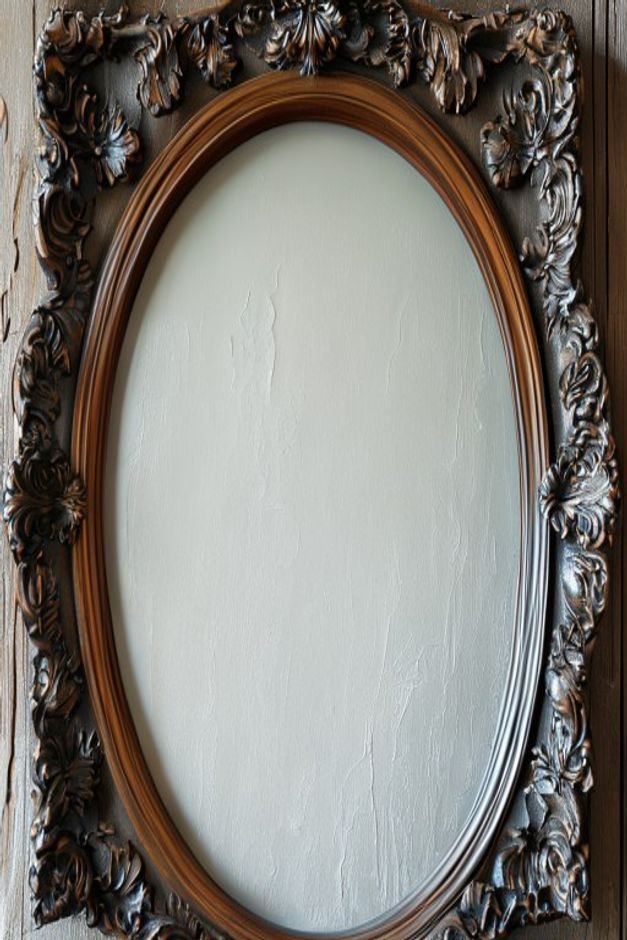
The Art of Framing and Finish
The frame of a mirror is just as important as the reflective surface itself. It acts as an extension of your room’s style, influencing the mirror’s overall presence.
12. Select a frame that complements the room’s existing materials. A rustic wood frame might suit a farmhouse aesthetic, while a sleek metal frame fits a modern space. The frame should speak the same design language as your furniture and accessories.
13. Use a statement frame to introduce texture or a focal point. An elaborately carved, gilded, or uniquely textured frame can turn a simple mirror into a piece of art.
It draws the eye and can be a strong design statement in an otherwise understated room.
14. Consider frameless mirrors for a minimalist, integrated look. For a truly seamless and contemporary feel, frameless mirrors blend into the wall, making the reflection the sole focus. This works particularly well in minimalist or modern interiors where clean lines are prioritized.
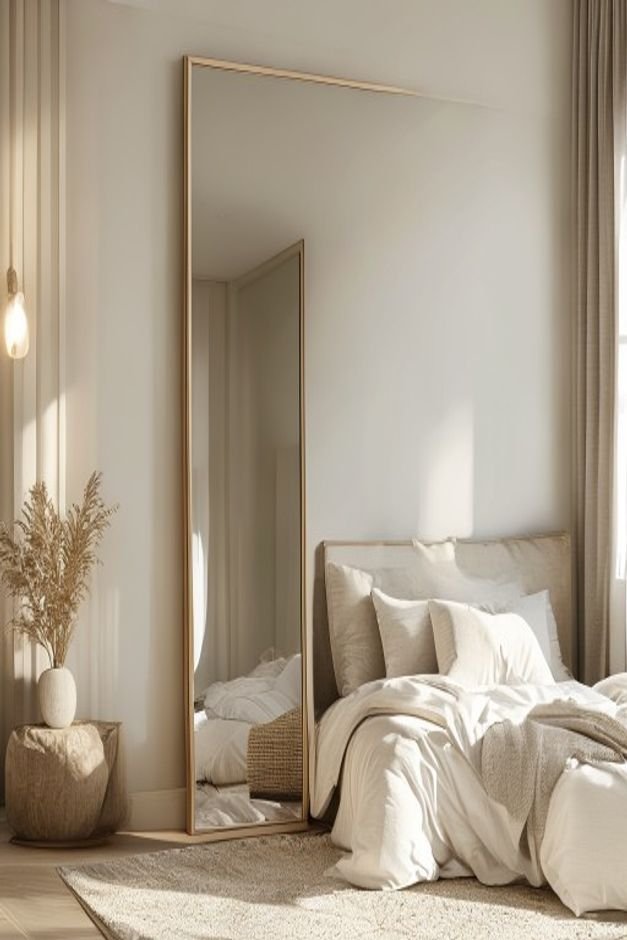
Leaning Mirrors for a Modern Touch
Leaning mirrors offer a casual yet sophisticated alternative to traditional hanging, adding depth and a relaxed elegance to a room.
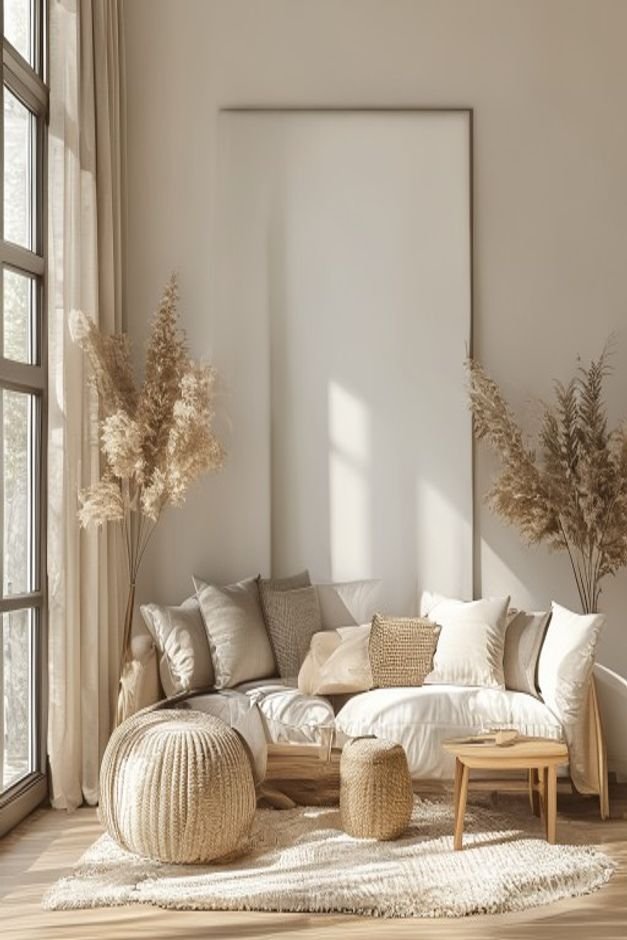
15. Employ oversized floor mirrors leaning against a wall. A grand, full-length mirror leaning against a wall adds an architectural element and makes a room feel larger and more dynamic. This works especially well in bedrooms, living rooms, or large entryways.
16. Layer a leaning mirror behind a console or bench. For added dimension, place a leaning mirror behind a piece of furniture. This creates a layered vignette, grounding the mirror and making it feel like an intentional part of a curated display.
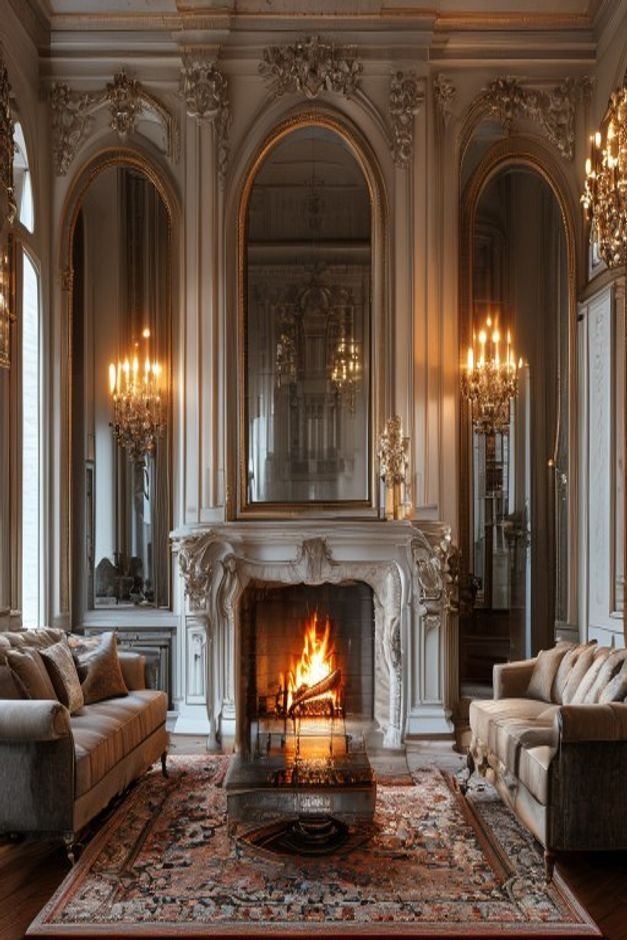
Symmetry and Pairing
Symmetry brings a sense of order, balance, and formality to a space. Mirrors, when used in pairs, can effectively establish this visual harmony.
17. Flank a doorway, fireplace, or piece of furniture with identical mirrors. Placing two identical mirrors symmetrically around a central element creates a balanced and elegant composition. This technique is particularly effective in traditional or formal settings.
18. Use a pair of mirrors over bedside tables for balance. In a bedroom, two matching mirrors above individual bedside tables can provide a sense of symmetry and purpose, reflecting light and making the space feel more open and luxurious than traditional art.
Reflecting Art and Architecture
The ultimate intentional use of a mirror is to treat its reflection as a curated view. It’s not just about what the mirror is, but what it shows.
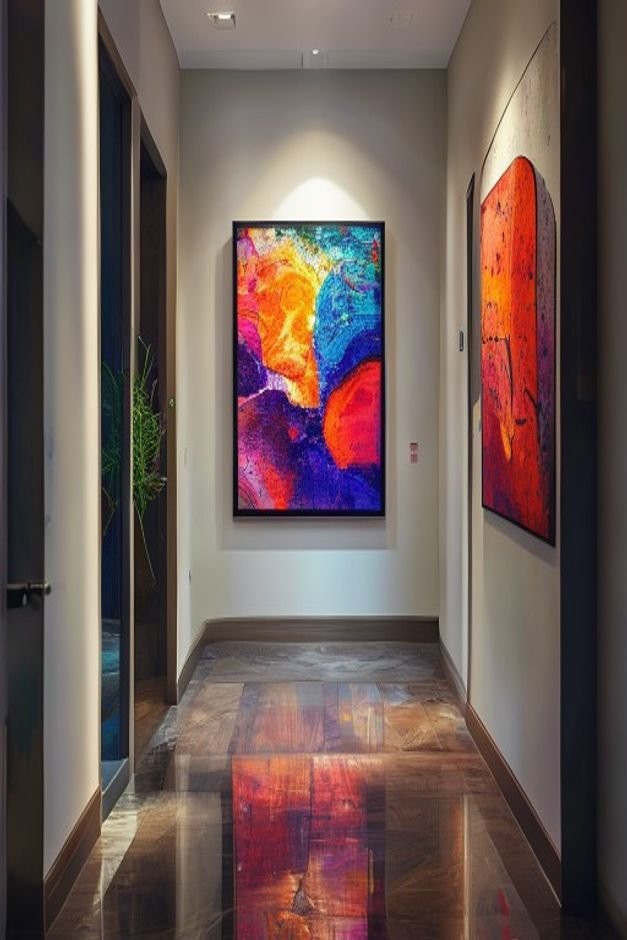
19. Position a mirror to specifically reflect another piece of art, a unique architectural detail, or an interesting light fixture. This turns the reflection itself into a framed element, highlighting a beautiful part of your home and adding an extra layer of visual interest.
It’s a subtle yet powerful way to integrate mirrors into your design narrative.
Intentional Mirror Wall Decor
Moving beyond simply filling a void, intentional mirror wall decor acts as a powerful design tool.
By considering scale, placement, framing, and what the mirror reflects, you transform it from a mere functional object into a dynamic element that enhances your home’s light, space, and style.
Approaching each mirror with purpose ensures it contributes meaningfully to the overall aesthetic, making your spaces feel thoughtful, polished, and truly unique.
